
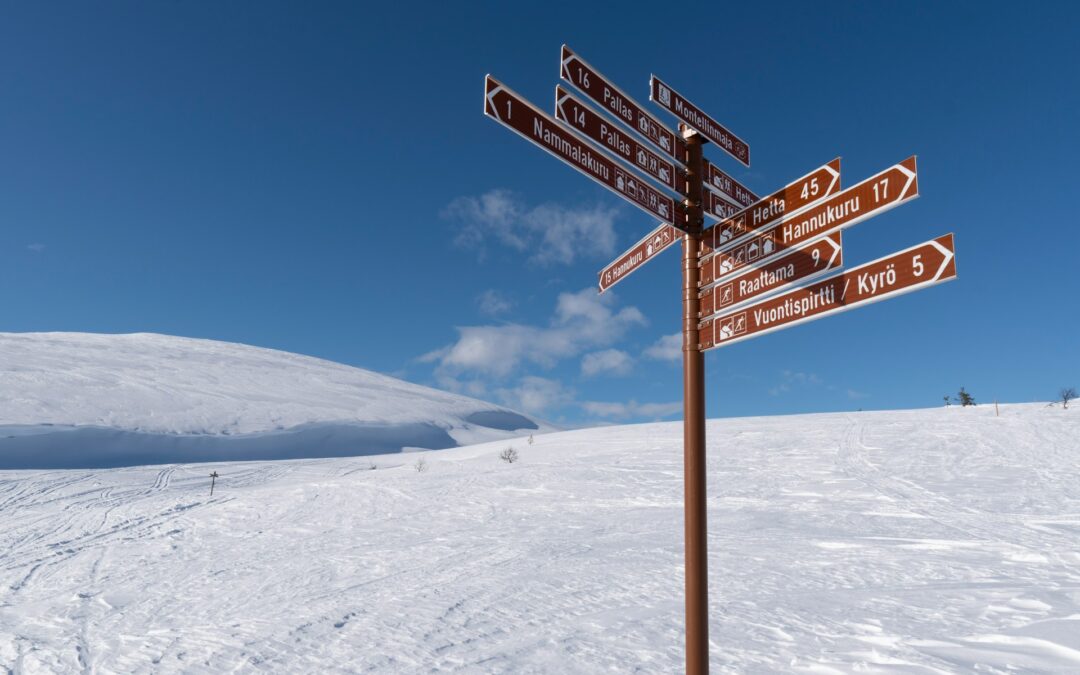
Walking country trails in late November can feel quiet and calm, but also a bit disorienting. With fewer people out, bare trees overhead, and light fading sooner each day, it is easier than you might think to lose track of the path. That is where clear direction really matters.
Waymarker signs play a bigger part during these colder months when grass is slick, skies are grey, and landmarks blend into one another. They help guide you from point to point, especially when frost is sitting on the ground and the edges of the trail feel less obvious. If you are heading out for a winter walk, knowing what to look for and how to read each sign can make all the difference.
Reading Waymarkers in Low Light and Frosty Conditions
One thing you notice quickly in winter is how fast daylight slips away. The sun hangs lower in the sky, shadows grow longer, and if you are walking through forest edges or narrow bridleways, visibility can drop before you expect it. Tree cover or valley dips can make parts of the trail darker in the afternoon, even before the sun is fully set.
Waymarker signs are usually placed on wooden posts or the backs of stiles and gates. During good weather, their colours stand out plainly, but in cold or frost-covered mornings, they can blend in. Mist or frost might make it hard to read colours at a distance, so focus on the overall shape of the sign, such as a round disc or square surface, and the direction it is fixed.
Many walkers trust colour, but low late-year light can wash out even the brightest signs. That is where angle, spacing, and physical position of the sign should guide your eye. A disc set facing left across a fork points that way. If a sign seems lower or leans, it may be sunken a bit into cold ground. Stepping in closer and looking overhead can reveal the route clearly again.
What Cold and Moisture Can Do to Waymarker Signs
Autumn’s rain and early winter freezes often show up in the details. Signs made from timber begin to absorb moisture, then release it again as temperatures shift. This can cause warping or fading. A disc that looked sharp in summer might seem blurred or cracked now. Painted arrows may flake, or glue holding a plastic badge could loosen after repeated freeze-thaw cycles.
Some signs go frost-bitten, where moisture has frozen in a hairline crack, splitting the wood or marker. Other signs can be iced over, especially metal markers on gates or signs near waterlogged fields. Some markers may have turned or sagged if a post has shifted, leaving the direction less clear.
None of these issues mean signs are useless, but they do ask for close attention. Check the post condition, glance at the ground for footprints if unsure, and see if the area matches what you expect from the trail. If something feels off, walk a few steps further before committing to a path. Clear markers often repeat on the next field edge, gate, or stile ahead.
JAKK crafts and supplies waymarker signs for paths and bridleways in rural areas, using hardwoods chosen to resist cracking or splitting in frost and wet.
Following Trails with Confidence When Footpaths Are Less Clear
Late autumn walks often mean trails look less distinct. Fewer boots packing down mud means paths disappear under leaves or wet grass. This does not mean you have lost your way, but you may need to read the signs and land together more carefully.
Pair what you see on waymarker signs with other features. A direction marker pointing along a line of old trees likely follows that boundary. If a post points over an open field, scan the opposite hedge or fence for the next sign, stile, or gate. Hedges, stone walls, and the shape of the ground under your boots all help confirm your path.
At a junction without a clear marker, listen and scan ahead. The obvious route may be just past a large puddle or beneath a layer of leaves. Footpaths do not disappear, they get hidden for a spell, but old patterns and sign locations often show where the line continues.
What to Carry or Notice Before Setting Off
Cold weather walks do not need a giant pack, but a few simple tools help a great deal. A printed trail map or route card helps pair up signs and features when directions fade. A small dry compass in your coat gives peace of mind and can confirm which way a sign actually points.
Reflective or brightly-coloured gear stands out more than people expect. It is not only for being seen by others. Your own outline is easier to spot returning across a frosty field. When you approach signs from a distance, vivid clothing helps spot each post on long, open tracks.
Tell someone which trail or loop you plan to walk, especially when the afternoons are short and changeable. Even close to home, if the wind or sky changes quickly, letting someone know your route means safer passage if you are late or the phone signal drops at a ridge or coppice.
Staying Oriented When the Path Is Quiet
Winter walks tend to be quieter. Some days you may see nobody for miles, which is part of the appeal. That peace means you need to check in with the signs more often, and judge your progress by the rhythm of what appears around you.
Pay attention to the pattern of waymarker signs. Some stretches show a post every hundred yards, others only at key places. Noting the rhythm means you soon notice if you are overdue for a sign or if something feels wrong. If the last post was at every stile or hedge and one does not show, stop and consider before pushing too far on.
Waymarker symbols do not overcomplicate things—an arrow, a coloured disc, a notch. These hold just enough detail to steer you onward. The landscape around you may shift as trees shed leaves, mud builds up, or light drops low, but the signs stand ready for anyone steady enough to read them.
Reading Winter Trails with a Steady Eye
There is peace in walking a field or wood when the only sound is wind or birds. Waymarker signs are quiet partners, helping you track your route when nature’s colours go dull or clouds move in. They are simple, useful, and always waiting for a keen eye.
As frost lines the ditches or dusk falls before you expect it, those markers become your steady guide. They are proof that others have walked here and found the way. Keep your focus steady, keep an open mind, and let the signs lead when the ordinary clues are covered in cold. That is how a winter trail gives back more than it takes.
Planning more winter walks or looking to make your parish routes easier to follow? Our handcrafted waymarker signs are built to handle whatever the weather brings. At JAKK, we shape each one to fit its setting, so your paths stay clear, trusted and easy to follow all year round.